How Clank! Teaches You to Build Better Dungeons
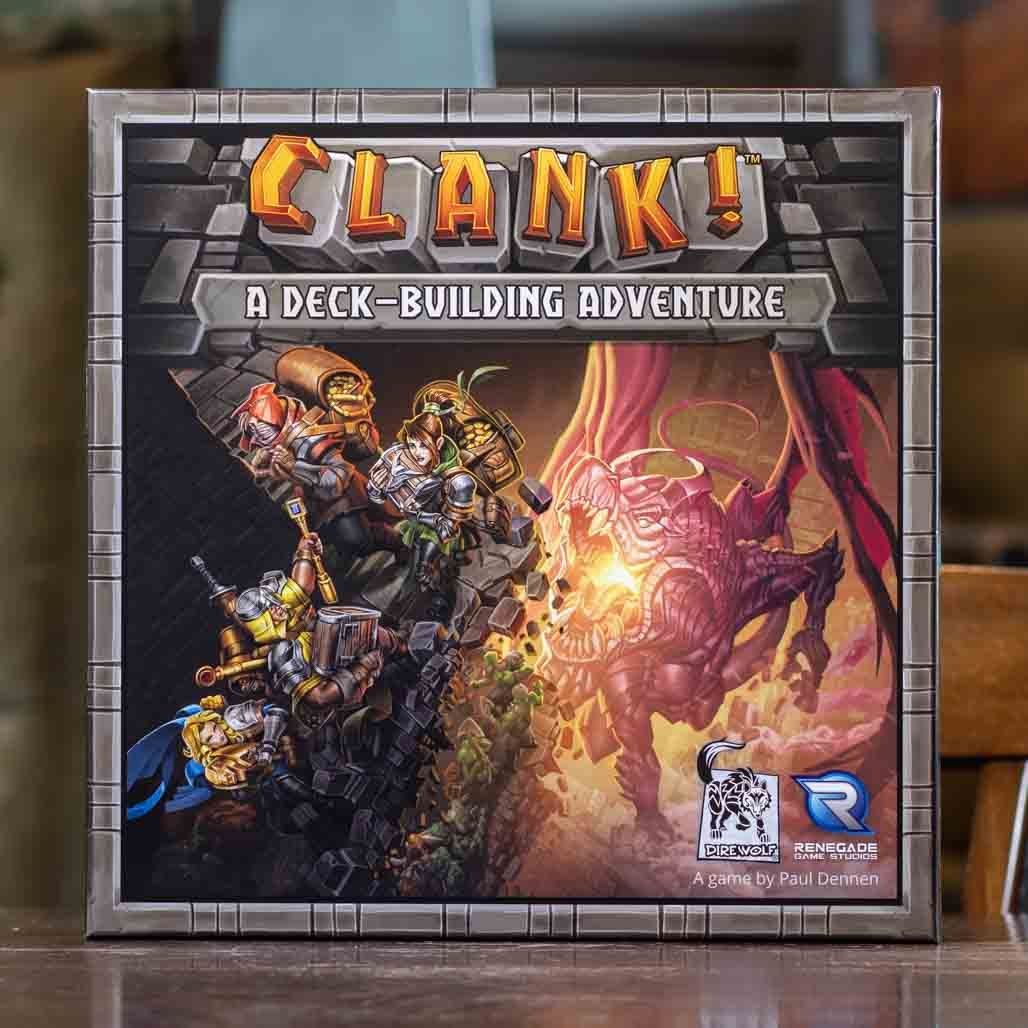
I really like Clank!. For those who don’t know it, it’s a board game where you go into a dungeon, fight monsters, navigate a maze of tunnels, and try to not make noise and gain the dragon’s attention (hence the name, Clank!). It’s a fun game, I recommend it, and I think it shows you how to build a fun and exciting dungeon for your players.
From time limits to interesting choices, this board game is a must-try for Game Masters looking to build exciting dungeons.
1) Time Limits
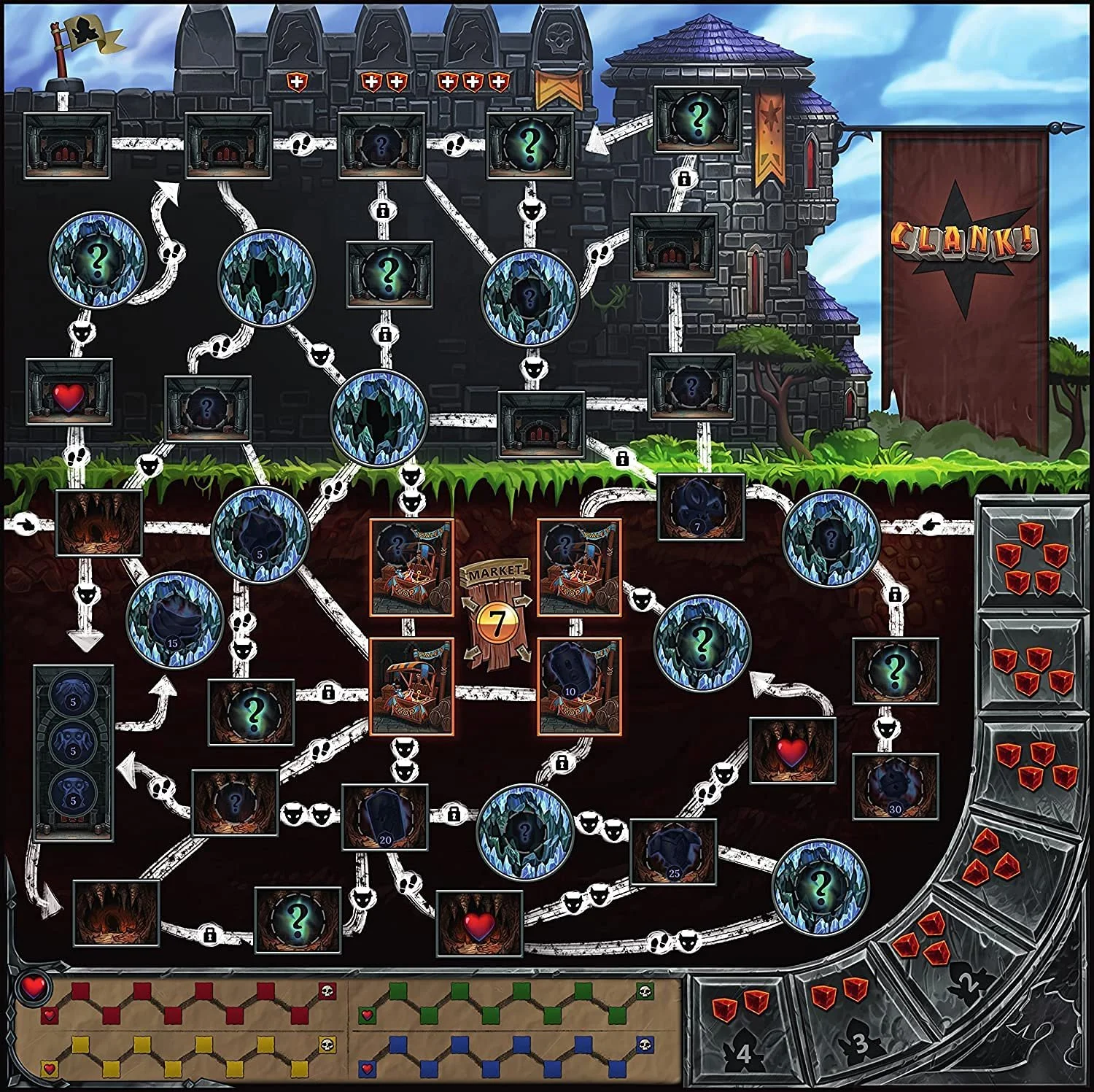
Throughout the game, you’re main goal is to get as many points as possible, as fast as possible, and then you need to get out. It does this by turning any noise you make via the game mechanics, into cubes that you put into a drawstring bag. When the dragon attacks, you pull those cubes and if your color is pulled, you take damage. Once you suffer 10 damage, you’re dead and you don’t get to escape the dungeon.
How does this mechanic apply to Dungeons & Dragons? It’s pretty easy. You don’t want your players taking a Long Rest after every fight. You want to encourage them to keep pushing deeper into the dungeon, as fast as they can. You can use a mechanic similar to Clank! where they are being hunted, and if they stay in one spot for too long, then they are in trouble, but player’s never run from combat and that’s a good way to get a TPK.
Instead, you might have the BBEG away from their dungeon for only a short day or two, this encourages the players to head into the dungeon, clear it quickly, and then leave before the BBEG gets back. They know they aren’t strong enough to face the BBEG, and this gives them access to the BBEG’s personal journal and a chance for them to drop a few bedbugs in the BBEG’s bed (it’s just a prank!).
You could also introduce a mechanic where the dungeon is crumbling around them, which could create an exciting skill challenge at the end where they have to outrun the collapsing dungeon on the way out. You might also have it so that there is a narrative reason why they must hurry, like the dungeon is only ‘open’ during a full moon, the dungeon rotates on great mechanical gears and is slow to disgorge the players, or some other means of driving home that the players can’t just do one encounter and then go back to the tavern to get a Long Rest and all their spells.
2) Greater Risk, Greater Reward
When diving into the dungeon, Clank! rewards those who go deeper and further than other players. That doesn’t mean you’ll automatically win, but you do have a shot at scoring way more points than everyone else… so long as the dragon doesn’t eat you first.
While a lot of adventures are written with the idea of the dungeon having an end point, that doesn’t have to be the case. You can have multiple end points in a dungeon, with the deeper the party goes, the more dangerous but the greater the reward. For example, if the party dives into a lich’s dungeon lair in search of information about what the lich is up to, the first ‘end point’ could be they get valuable information that the lich is currently at Monkey Island and training monkeys to ride giraffes into battle. If the party pushes deeper into the dungeon, thus dealing with greater threats and hazards, they can learn that not only is the lich at Monkey Island, but it created a superweapon on the island that the monkeys will be using to disintegrate castle walls. If they still go deeper into the dungeon, they find out more information about the lich, like how its phylactery is locked away in a treasure vault of an ancient red dragon named Garglesblaster the Hot Flame.
This poses a decision to the party. Do they push deeper into the dungeon to get more information and more treasure (or knowledge), or do they take what they got, and then leave the dungeon and trace the lich down to Monkey Island, only to be then surprised when the monkey’s have a death ray they didn’t learn about while in the lich’s lair?
This creates an interesting choice for the party, but should also be clearly stated to them. We are so trained that you keep hacking away at a dungeon to accomplish the adventure, that we may not realize that you can just leave to follow the information you gained elsewhere.
That said, this is also great for pushing the party to take on sidequests inside the dungeon itself. If your players make nice with a kobold necromancer who needs more drow corpses to finish building their flesh golem, the party will have to decide if they are willing to risk diving deeper into the Underdark and wiping out a small drow fortress for the required bodies, and if the reward the kobold necromancer is giving (such as the kobold necromancer won’t smite them where they stand), is worth the risk.
3) Racing Other People
At its heart, Clank! has you racing the other players to get the best artifacts, earn the most gold, and get out of the dungeon faster. It’s a racing game. While we don’t recommend splitting the party into 4 groups, each tackling the dungeon down different hallways and tunnels (the poor GM…), we do recommend that there is more than just the adventuring party dealing with the dungeon.
You should have other factions or people in the dungeon, some working against the party, some working parallel, while others could be working against other factions within the dungeon (and using the party to attack the other factions!). By adding in social encounters and options of making friends (or meaner enemies), you can make the dungeon feel more alive, make it more responsive to the party and how they deal with the inhabitants, and even use it to push the party deeper into the dungeon to finish sidequests for greater rewards (with even more risk!).
Like what we do?
Join our Patreon!
You’ll get early access to deep dives, the Homebrew Hoard
featuring 500+ monsters, ad-free articles, and more!
Follow us on Reddit to keep up to date on everything we talk about!