Deep Dive - The Changeling
While you might think of the Changeling as a poor man’s doppelgänger, but there is quite a distinction between them. In European folk lore, is a human-like creature left by a supernatural being, most often a fey or demon, who has kidnapped the original human (often a child). A Changeling can often be spotted because they suddenly act different, such as violent mood swings or developmental delays. They also might take sick and die suddenly without any identifiable reason, even if they had been perfectly healthy just a few days earlier and had suddenly acted strange.
For us, though, the Changeling is a shapeshifter that infiltrates societies and cultures. Some are created by wizards, others by the Feywild, but are their own person. They don’t swap places with another, unless they are sent in as assassins, killing the person, and assuming their place in the king’s royal court.
Note: We are aware that a creature called the ‘Changeling’ appears in 2nd edition with the sourcebooks Blood Spawn (2000) and The Shadow Rift (1998), but those Changeling aren’t anything like the Eberron Changeling, and this is specifically looking at that style of Changeling, not babies kidnapped by the fey. We decided it would muddle things too much to include them.
Basic D&D - Changeling, Zargosian
Armor Class: 8
Hit Dice: 1* (M)
Move: 120’ (40’)
Attacks: 1 bite or 1 weapon
Damage: 1d6 or by weapon
No. Appearing: 2d6 (1d3)
Save As: F1
Morale: 7
Treasure Type: (U) C
Alignment: Chaotic
Intelligence: 10
XP Value: 13
Our deep dive is beginning earlier than you might have assumed with HWR3 - The Milenian Empire (1992). The Changeling first appears not in Eberron, but in Mystara. The Zargosian Changeling is similar to the Changeling you know and fear from Eberron, but it has a number of differences that make it fairly questionable as to why we would include it in a deep dive all about the Changeling, but how often do we get to bring up Mystara?
Zargosian Changelings are shapeshifters, capable of shapeshifting into any human, demihuman, humanoid creature up to 7 feet tall, and while you might scream doppelganger, they aren’t quite as skilled. Doppelgangers only have to look at you in order to match your appearance, Zargosian Changelings have to chew a bit of you in order to match your appearance. This might be a hinderance, it is far easier to see a king than it is to taste their toenails, but you can also have a Zargosian Changeling turn into the person if you can just get them a bit of hair. So in some aspects, its worse than a doppelganger and in other aspects its better.
Also, unlike doppelgangers, these Changeling don’t have a psychic connection to the target they transform into. They don’t immediately gain the target’s thoughts, mannerisms, or similar, instead they have to study their target for a while or completely wing it and hope no one is confused why the king keeps using slang that only the street kids use.
If your wondering what a Zargosian Changeling looks like when it isn’t wearing someone else’s fit, then prepared to be slightly horrified. It looks like a pale humanoid, but with sinister eyes and a mouth filled with needle-like teeth. They have a skeletal look to them, making some think of them as undead creatures.
Probably the main reason that the Zargosian Changeling haven’t taken over the world is because they are created by Zargosian sorcerers and act as the servants, spies, and assassins of those sorcerers. We’re sure the moment that a bunch of Zargosian sorcerers decide to take over the world, these Changelings will be ready act.
3e - Changeling
Medium Humanoid (Shapechanger)
Hit Dice: 1d8+1 (5 hp)
Initiative: +1
Speed: 30 ft. (6 squares)
AC: 14 (+1 Dex, +3 studded leather), touch 11, flat-footed 13
Attack: Rapier +2 melee (1d6–1/18–20) or light crossbow +2 ranged (1d8/19–20)
Full Attack: Full Attack: Rapier +2 melee (1d6–1/18–20) or light crossbow +2 ranged (1d8/19–20)
Space/Reach: 5 ft./5 ft.
Face/Reach: 5 ft./5 ft.
Special Attacks: -
Special Qualities: Changeling traits, minor change shape
Saves: Fort +3, Ref +1, Will -1
Abilities: Str 8, Dex 13, Con 12, Int 10, Wis 9, Cha 11
Skills: Bluff +2, Disguise +0*, Intimidate +2, Jump +0, Sense Motive +2, Spot +1
Feats: Weapon Finesse
Climate/Terrain: Any
Organization: Solitary, gang (2–4 plus 1 3rd-level leader), or clan (10–60 plus 30% noncombatants plus 3rd-level boss per 10 adults, 2 5th-level, 5th-level elders, plus 17th-level clan head)
Challenge Rating: 1/2
Treasure: Standard
Alignment: Usually neutral
Advancement: By character class
Level Adjustment: +0
While the Changeling is first shown off in Dragon #304 (February 2003), that is not the Changeling we are looking at. This article provides character rules for playing as a fey-swapped Changeling, and that’s not what we’re here for.
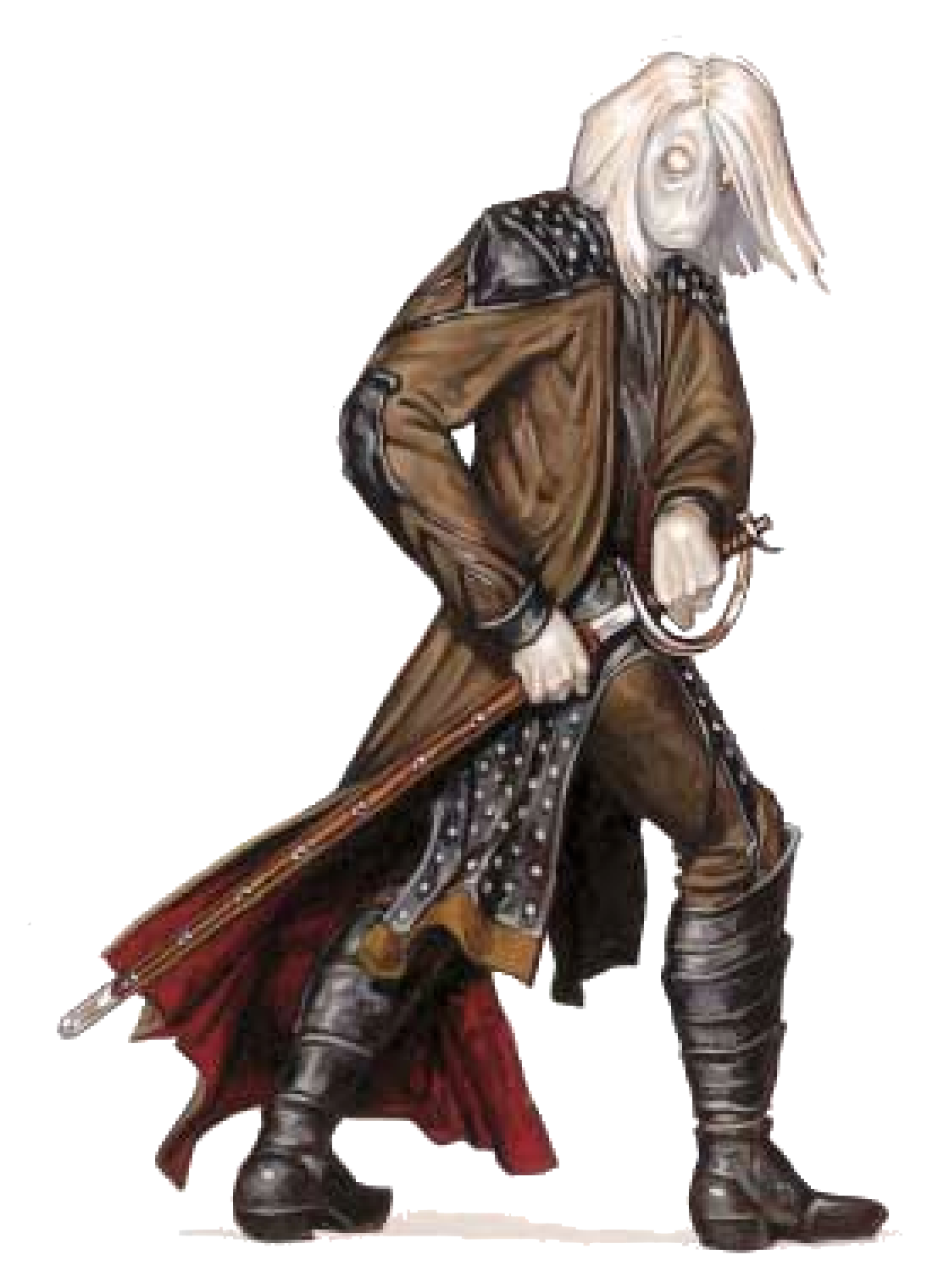
Monster Manual III, 2004 Wizards of the Coast / Matt Cavotta
The Changeling is truly found in the Eberron Campaign Setting (2004) and reprinted a few months later in the Monster Manual III (2004). The Changeling was one of the new races introduced with the creation of Eberron with information on making a Changeling character, along with the kalashtar, shifter, and warforged. The Changeling are the evolutionary result of doppelgangers and humans getting busy. It’s a completely reasonable way for the creators to explain their existence, and we have to say we are relieved it’s not just another entry from some mad wizard’s experiment gone awry (looking at you, Zargosian Changelings).
It’s important to start off by letting you know that a Changeling is not someone who can transform themselves into a creature so perfectly that you’d never know. On the plus side, they can use this ability at will, but the Changeling’s ability is more akin to the disguise self spell. They can alter their appearance, but not their possessions, and spells such as true seeing will reveal them as Changelings. It is, for sure, better than slapping a fake mustache on your face, but we all have our limitations and acting might not be every Changeling’s forte.
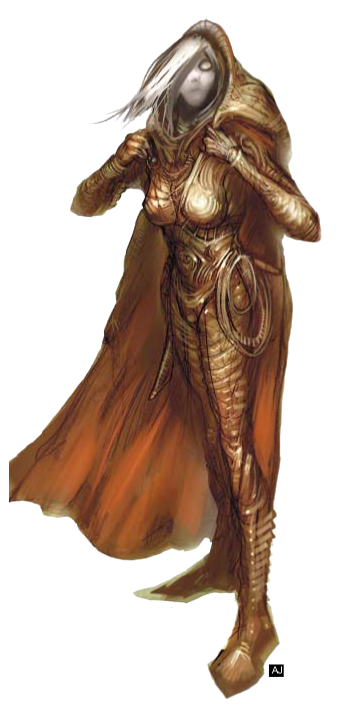
Eberron Campaign Setting, 2004 Wizards of the Coast / Andrew Jones
As a species, Changelings look more like the doppelganger side of the family than they do humans. Changelings have a gray complexion with thin, wispy hair. Their facial features are plain and generic in their natural form, with a small semblance of a nose and lips, but blank white eyes. The remainder of their face is more like that of an unfinished product, at least when compared to a human face. Other than that, they age like humans, their average height and weight are similar to most humans. Their first language is common, although many learn to speak numerous languages, since it’s usually a good idea to speak Elvish if you can change your appearance to an elf.
Changelings are cautious, weighing risk versus benefit, so yelling “Lerroy Jenkins” is not something you’ll hear them scream. Facing conflict head-on isn’t their thing. They are smarter than most players since they have no qualms about running away when plans go bad or they get found out. Changelings rely on stealth and subterfuge, so yes, you’re correct in thinking they make great rogues. They are experts at extracting information from people without them realizing it, which helps them avoid resorting to the stabby-stabby method of procuring the wealth they need to live the good life.
In society, Changelings are regarded with mistrust by most species. I mean, come on, would you be able to trust someone who could morph into you? Or better yet, your mom? This isn’t to say people won’t do business with them, but they do so with caution. Most are of neutral alignment, worship the Traveler (no relation to the Traveler from Critical Role), and when specifically discussing the Eberron setting, reside pretty much everywhere in Khorvaire as they have no homeland of their own.
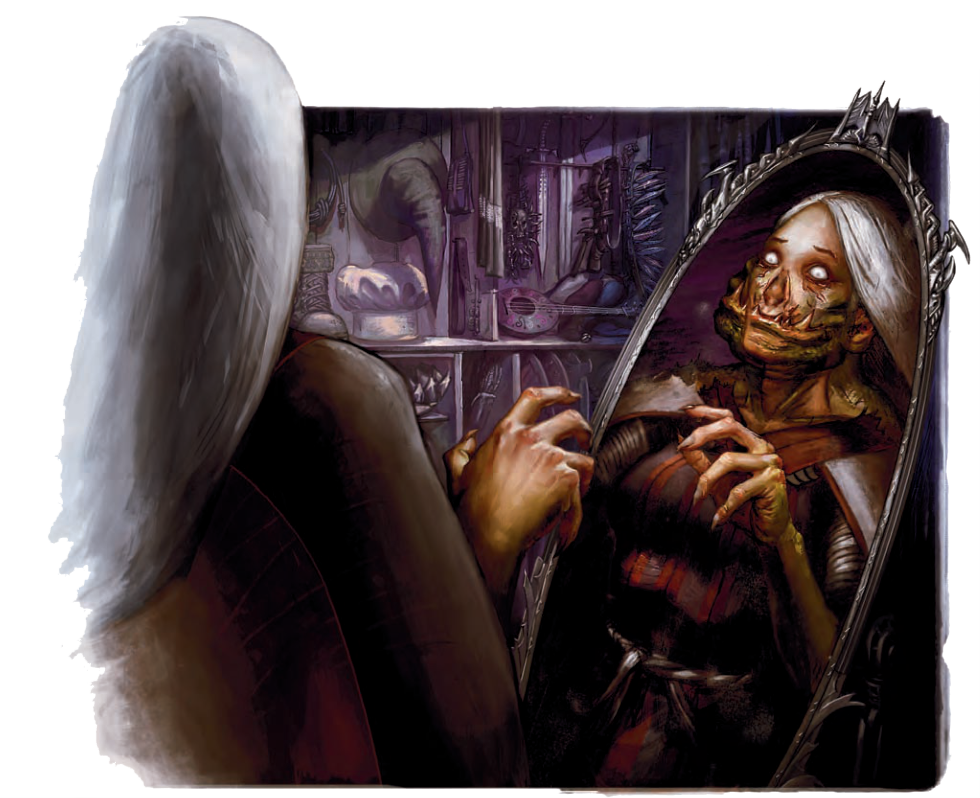
Races of Eberron, 2005 Wizards of the Coast / E Deschamps
If you are interested in making your own Changeling character, they gain bonuses against sleep and charm effects, bonuses to deception, intimidation, and sense motive checks, and can, obviously, change their shape. This change shape is described like a disguise self spell, but instead of being an illusion, it is a physical change. While they are changed, they gain a +10 bonus to deception checks when utilizing their disguise in the check, such as tricking people into thinking they are the true king and not the peasant screaming at them.
Races of Eberron (2005) dives headfirst into the new races found in Eberron, among them the Changeling. Lots of the same info, along with some new stuff. Changeling babies are always produced when two changelings get busy, and a 50% chance when a changeling gets it on with another type of humanoid. Changelings have a specific gender type developing in their teens, as if life weren’t confusing enough at that age. Of course, once a Changeling is able to morph into someone else, they can choose either gender or remain genderless if they so choose.
One of the more interesting new tidbits here is the psychology behind a Changeling and how they view themselves in the world. They are broken up into three groups: the Passers, the Becomers, and the Reality Seekers.
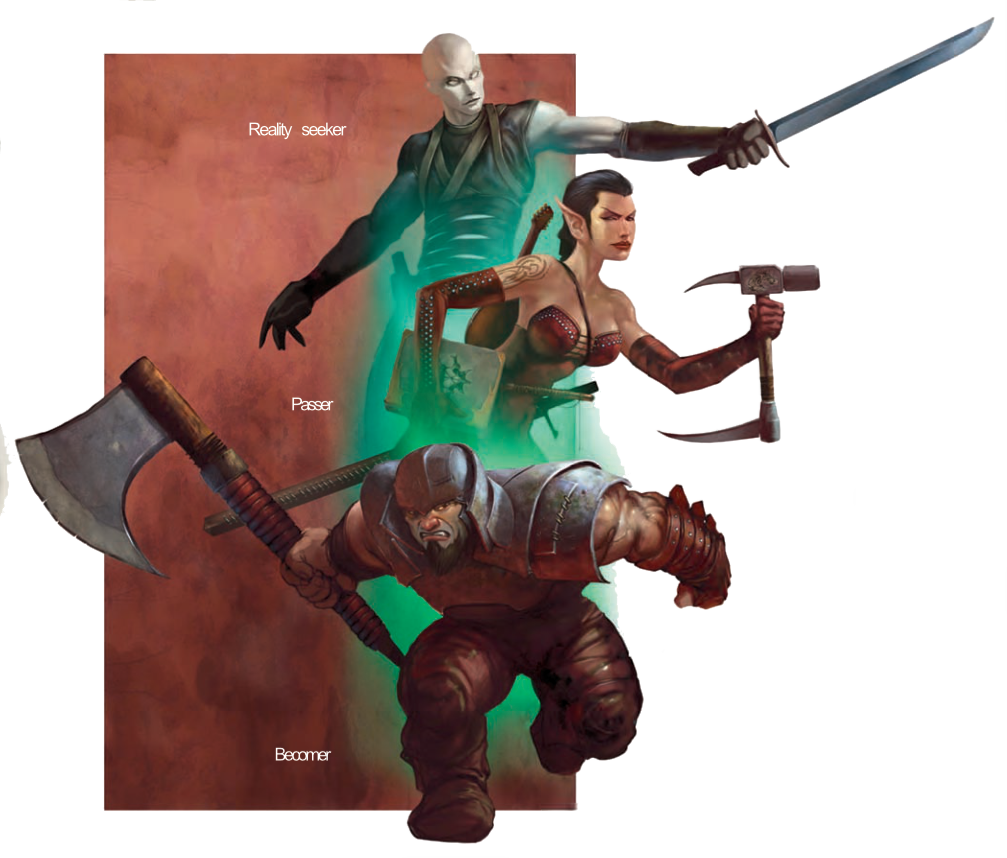
Races of Eberron, 2005 Wizards of the Coast / F Tsai
The Passers want to be accepted members of society. They use their shape-changing ability to “pass” themselves off as a regular Joe, blending into the local framework and hiding their true nature. Becomers are the opposite, reveling in their ability to take on any number of forms. They full embrace their mutability, changing often, not only physically, but in what they do and, essentially, who they are. Reality Seekers are most comfortable in their natural form. They believe there is an ultimate truth and perfect form, and it’s their life’s mission to discover it.
The Player’s Guide to Eberron (2006) allows you to make your own Changeling character. There’s not much new information about the character, with everything found in the campaign setting book here, just with different, pretty words saying the same thing as before. For example, there’s a section on how to spot a Changeling, which uses a lot of words to tell you common-sense things they’ve already talked about. First, notice their clothes remain the same. Second, they may not know the language or culture of the species that do not look like them. And third, a Changeling may not have the skills or abilities of a profession they claim to be. Hopefully you have at least a point in Sense Motive so you can spot these glaring faults.
Changlings are found as minor NPCs, usually as villains, rogues, and other miscreants, appearing in various publications and adventures such as the Sharn City of Towers (2004), Whispers of the Vampires Blade (2004), Dragons of Eberron (2007), and City of Stormreach (2008). While none are the big bad evil guy at the end of the adventure, we’re sure they could turn themselves into a BBEG if they really wanted to.
4e - Changeling
Ability Scores: +2 Dexterity or Intelligence, +2 Charisma
Size: Medium
Speed: 6 squares
Vision: Normal
Languages: Common
Skill Bonuses: +2 Bluff, +2 Insight
Shapechanger: You are a shapechanger; you can alter your appearance. As such, you are subject to effects and conditions that affect shapechangers.
Mental Defense: You have a +1 racial bonus to Will.
Change Shape: You have the changeling disguise power.
Changeling Trick: You have the changeling trick power.
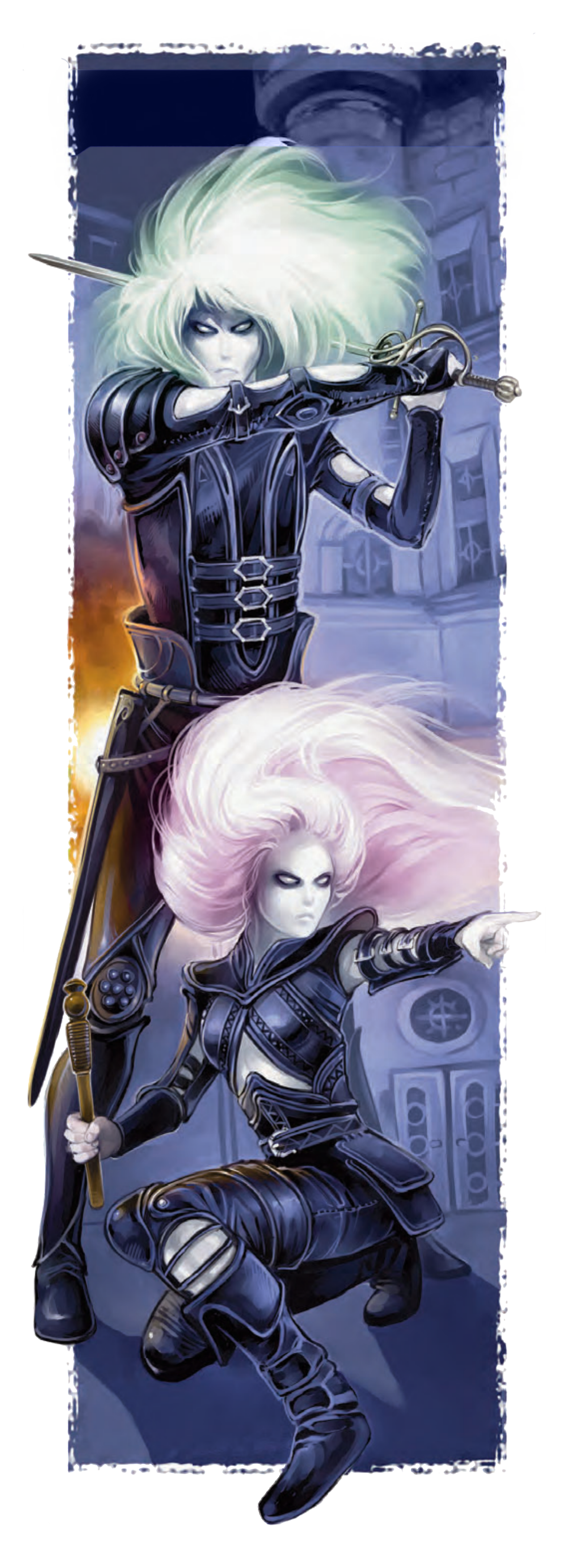
Eberron Player’s Guide, 2009 Wizards of the Coast / Eva Widermann
This edition switches things up, as we don’t get a monster to kill, but we do get rules to use a Changeling as a player character in Eberron Player’s Guide (2009). These Changeling largely remains the same as the previous edition. Changeling are a people without a nation, or even much of a culture, they fear being found out, slow to trust others, and can change their appearance with their shapechanger abilities.
What’s interesting, if not a bit insulting, is that they are called parasites on society. They don’t construct their own culture or art, but rather adopt the culture, art, and society of whoever they are imitating at the moment.
Changelings are, by-and-large, mistrusted by others. People mostly see the worst in Changelings and their shapechanging abilities, assuming they do it only for evil ends, but that isn’t true for all. While some are definitely happy to use their disguise ability for evil, such as assassins or criminals, most seek to live their lives and ingratiate themselves into the societies of others.
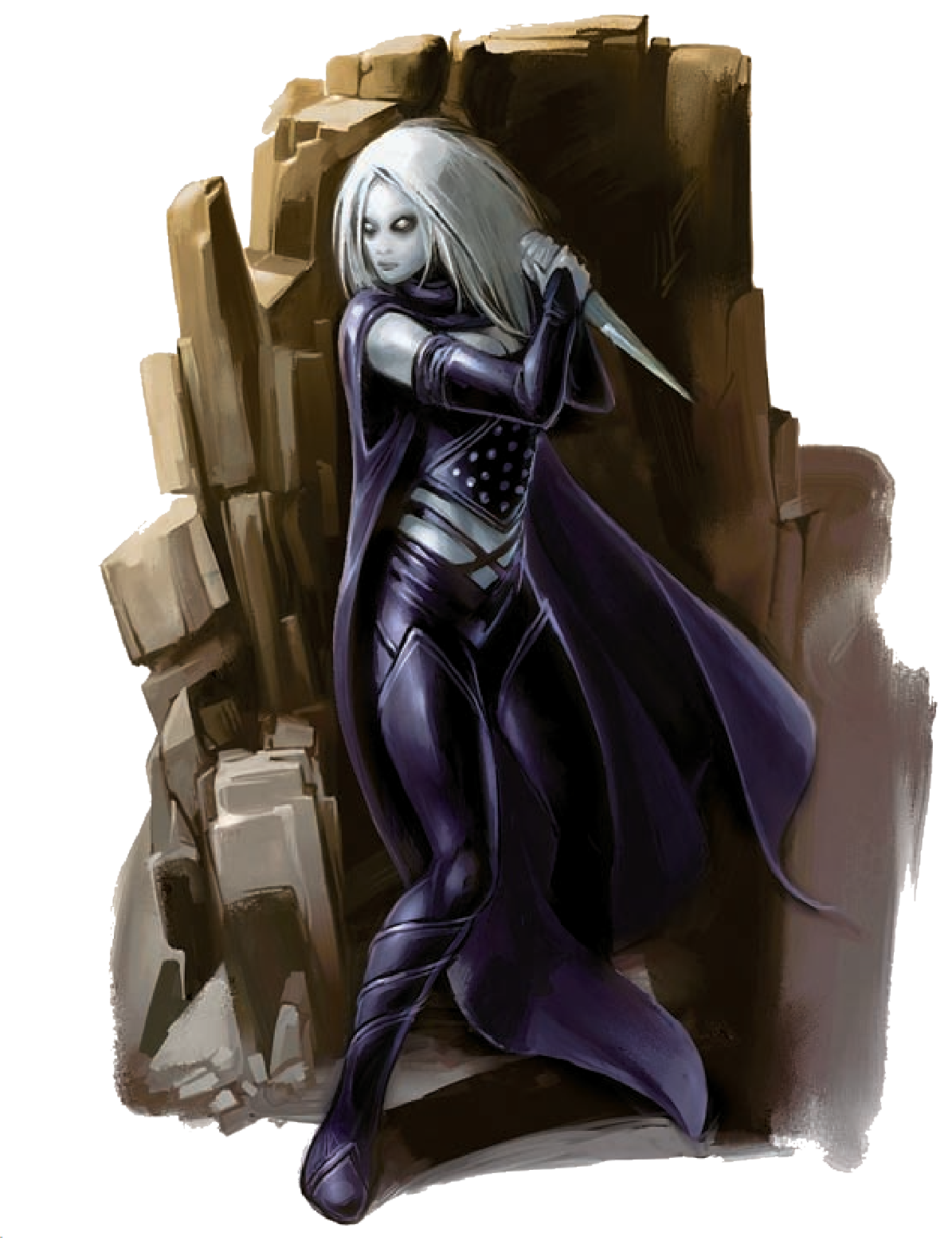
Monster Manual, 2008 Wizards of the Coast / Eva Widermann
We slightly lied when we said that the Changeling doesn’t appear in a Monster Manual in this edition, as they kind of appear a year before their debut in Eberron. In the 2008 Monster Manual, the Doppelganger appears, and while previous editions have treated them as a separate creatures, this edition blurs them. The art looks almost exactly like a shapechanger, it just has less cool hair, and its stat block references the two abilities that Changelings get, Change Shape and Changeling Trick (but called Shapeshifter Feint).
So are they the same? They’re close enough that it could just be that some doppelgangers prefer the name Changeling, or some Changeling prefer the name doppelganger. They are secretive, incredible spies and assassins, and when they transform, they can’t change their clothes so they must keep several outfits at the ready in case they need a sudden fit change.
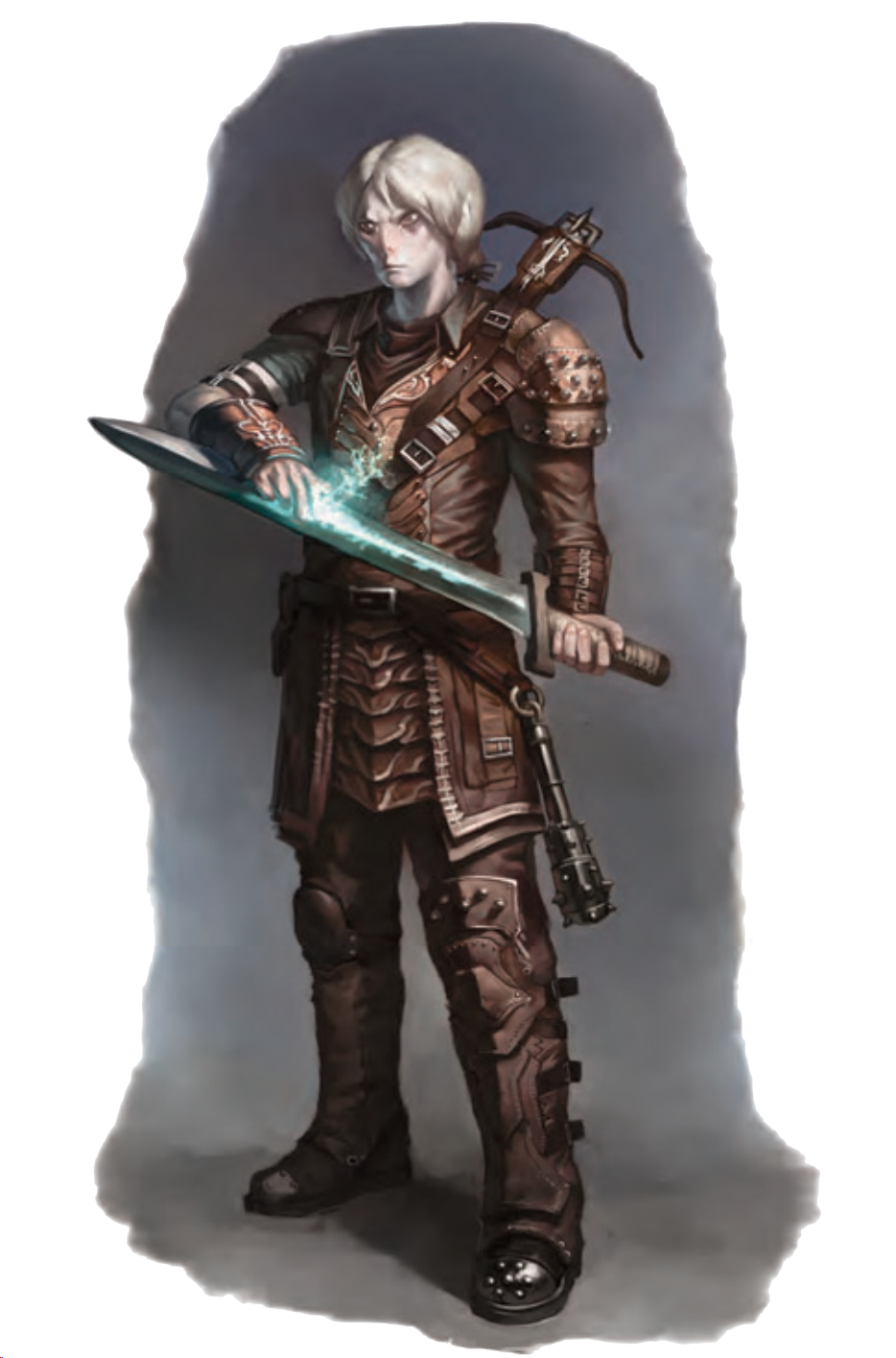
Eberron Player’s Guide, 2009 Wizards of the Coast / Matias Tapia
5e - Changeling
Medium humanoid (changeling, shapeshifter), any alignment
Armor Class 13 (leather armor)
Hit Points 22 (4d8 + 4)
Speed 30ft.
STR 8 (-1) DEX 15 (+2) CON 12 (+1) INT 14 (+2) WIS 10 (+0) CHA 16 (+3)
Skills Acrobatics +4, Deception +5, Insight +2, Perception +2, Persuasion +5
Senses passive Perception 12
Languages Common, Dwarvish, Elvish, Halfling, thieves’ cant
Challenge 1/2 (100XP
Change Appearance. The changeling can use its action to polymorph into a Medium humanoid it has seen, or back into its true form. Its statistics, other than its size, are the same in each form. Any equipment it is wearing or carrying isn’t transformed. It reverts to its true form if it dies.
Multiattack. The changeling makes two attacks with its dagger.
Dagger. Melee or Ranged Weapon Attack: +4 to hit, reach 5 ft. or range 20/60 ft., one target. Hit: 4 (1d4 + 2)piercing damage.
Unsettling Visage (Recharges after a Short or Long Rest). Each creature within 30 feet of the changeling must succeed on a DC 13 Wisdom saving throw or be frightened for 1 minute. A creature can repeat the saving throw at the end of each of its turns, ending the effect on itself on a success.
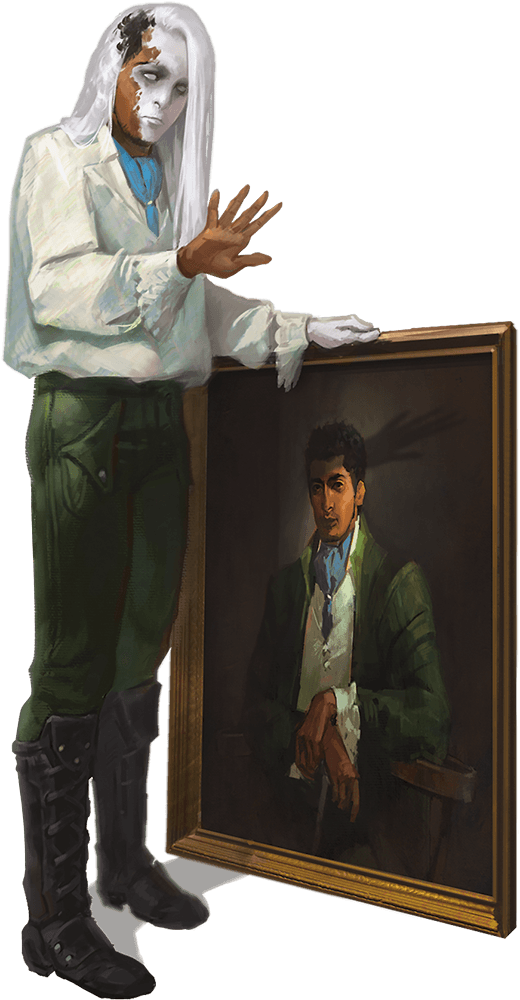
Eberron: Rising from the Last War, 2019 Wizards of the Coast
The Changeling first appears in Eberron: Rising from the Last War (2019) as a creature to fight to the death or as a playable species. While there is a lot of similar lore to previous editions, there are some differences as well as additional lore to flesh out theses creatures (see what we did there?).
Changelings are born into this world and begin to follow a path they will journey on their entire life. The paths are similar to the three groups discussed in 3.5e, but without the fancy titles that accompanied them. The first are comfortable in their own skin and live with other races. The second group follows the Traveler's path through the world, never settling in one place, keeping their true form a secret from the rest of the world. Lastly, there are the orphaned Changelings who are taken in by kind souls.
They are masters of deception and subterfuge, quickly taking on new forms and rarely staying in their base form, that of a pale body with colorless eyes and silver-white hair. Their shapechanger ability is still similar to a disguise self spell, but it is a physical change, not an illusion.
There are now two types of shape-changing styles. There’s the Mask shape, a quickly thrown-together look with no background, where the Changeling gives it a short lifespan, serving a purpose for the current situation or conveying emotion. We imagine a Changeling morphs into something truly terrifying when they are really mad, with their end goal of making the target pee their pants.
The other is a longer-term change in which the Changeling creates a fully fleshed-out identity. This isn’t to say they don’t change often, swapping between the numerous identities they have put a lot of effort into. A Changeling switching between personas is like shoes to a fashionista. They try them out, buy the ones they like, and wear whatever suits what they are doing out in the world. There are even personas shared among multiple Changelings. Think identical twins or triplets, but they do more than try to sleep with their sibling’s significant other - unless, of course, they are a Bard.
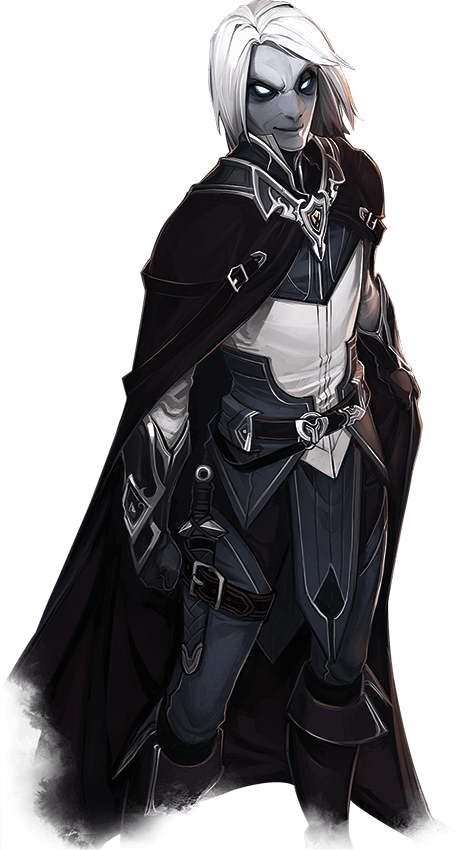
Monsters of the Multiverse, 2022 Wizards of the Coast
In a surprise move by Wizards of the Coast, the Changeling is given a remake in Monsters of the Multiverse (2022). No longer are they stuck on Eberron shores, but have spread across the multiverse along with a new backstory about where they originate from. Now, Changelings have a place of origin, the Feywild.
To go along with this new origin, they are also no longer humanoids, but fey. However, the rules are not very clear as to whether this means you can do more with your shape change ability, only stating that you can appear as another race. While you must adopt a form that has the same basic arrangement of limbs, it seems like you can transform yourself to look like the fiendish Gnoll, the fey Goblin, the humanoid Humans, along with Dryads, Maezels, Merrenoloths, and other creatures that look human-enough but are fey, monstrosities, fiends, and more. Word is still out on whether or not Changelings can be tieflings (since they have tails and some have wings) or kobolds (again, that pesky tail…).
The Feywild, like Changelings, are known for being mutable and ever-shifting. Whether its peril or joy, Changeling adopt new forms for the sake of mischief or malice, swapping identities as easily as the leaves change color in the Feywild. It is rare you will ever see a Changeling in their true form, that of one devoid of detail.
Lastly, while Changelings can take on personas, now whole communities might share the same persona, such as a healer might be three different Changeling. Changelings might even pass these personas down, like an inheritance where a younger Changeling can take advantage of contacts established by their elders.
The Changeling get one last appearance in Eberron: Forge of the Artificer (2025) where they return as a playable race in the updated Eberron sourcebook for 5.5e. Beyond constricting the lore slightly, there is almost no difference between this incarnation of the Changeling and its appearance in Monsters of the Multiverse.
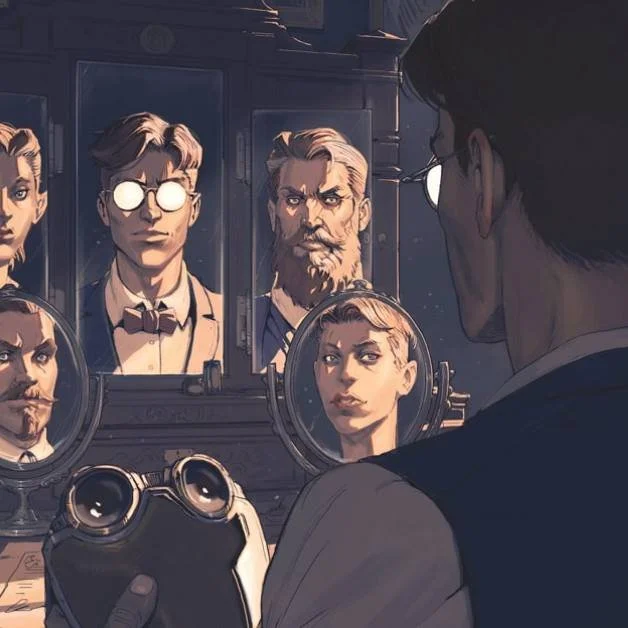
Eberron: Forge of the Artificer, 2025 Wizards of the Coast
Are these doppelgangers dangerous and evil, as many outsiders might think, or are they simply trying to survive in a world that isn’t quite as mutable and changeable as they are? While societies fear the powers of a shapechanger, the shapechanger also fears being discovered, sticking ever closer to the shadows and keeping their distance from others.
If you enjoy our Deep Dive series, consider
supporting us on Patreon
and following us on Facebook and Instagram!