5 Real Ancient Rituals to Add to Your D&D Games
Incantations and rites aren’t just things that happen around a gaming table, but exist in Earth’s past when ancient people sought to understand how to control their lives and the world around them. The following ancient rituals and artifacts were important parts of their culture that give us modern-day people a glimpse into what life was life thousands of years ago.
Drawing on these ancient, real-world rituals and artifacts can help us ground our own fantasy worlds, providing insight into what it must be like to live in a world filled with magic, monsters, and gods.
1) Incantation Bowls
This clay bowl is covered in a spiral pattern of inscriptions with a drawing of a demon at the bottom of the bowl. For this bowl to function properly, you must bury it upside down with its concave side facing down so that it can trap demons that attempt to rise from below.
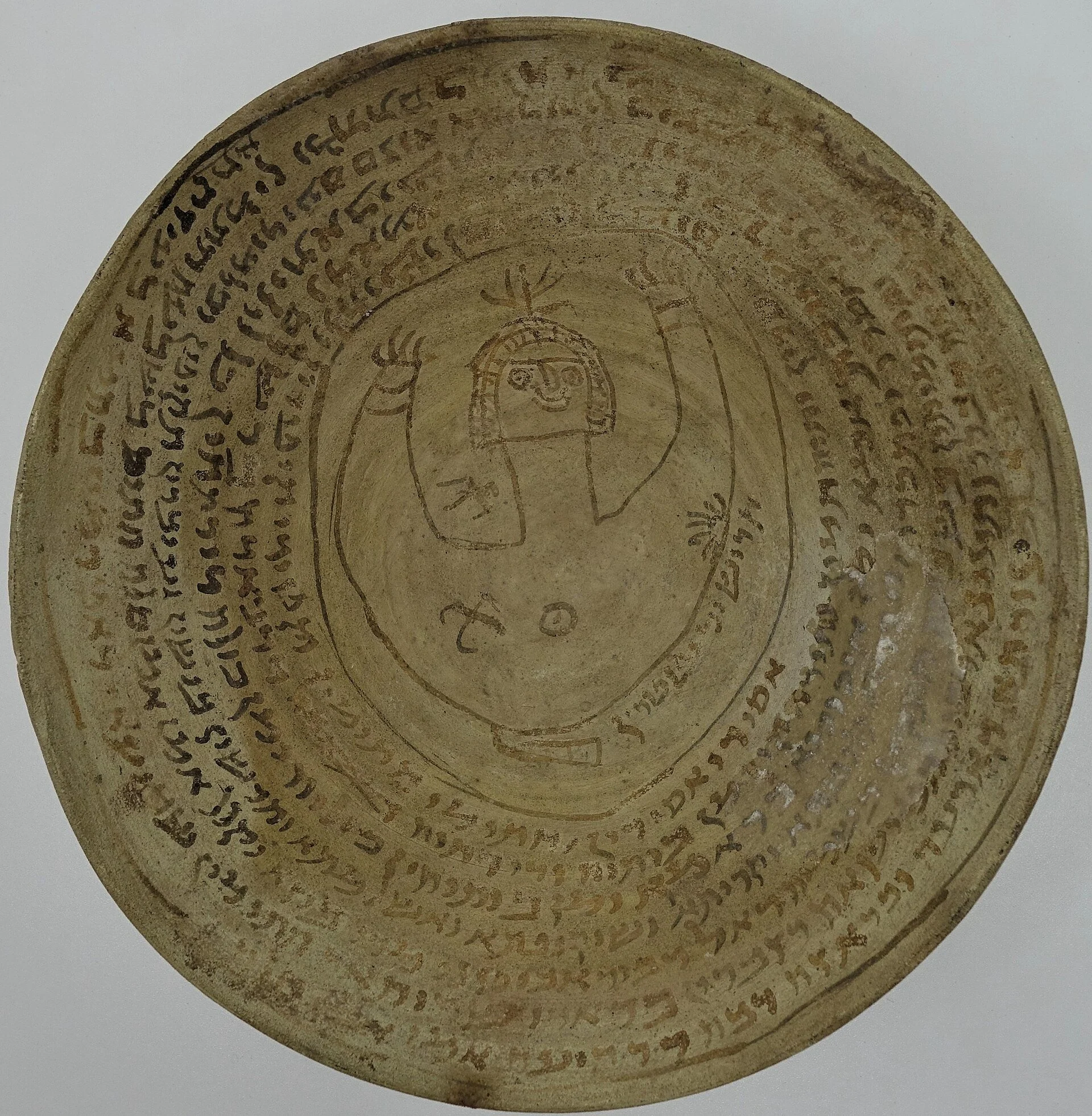
By LGLou - Own work, CC BY-SA 4.0, https://commons.wikimedia.org/w/index.php?curid=113000949
These bowls were placed under doorways or homes, and intended to keep demons and other foul spirits from entering the home, especially in the homes of those recently deceased. These demons would then be ‘trapped’ in the bowls, unable to work their evil.
For more information - MiniMinuteMan, Wikipedia
How to Use
You can use these bowls in your games by having them act as an important magic item your players need to craft or find so that they might capture a powerful demon (instead of fighting it).
Another way you might integrate it into your campaign is that the party find an upturned incantation bowl as foreshadowing that a great evil has been released from its prison.
2) Spell Sheets
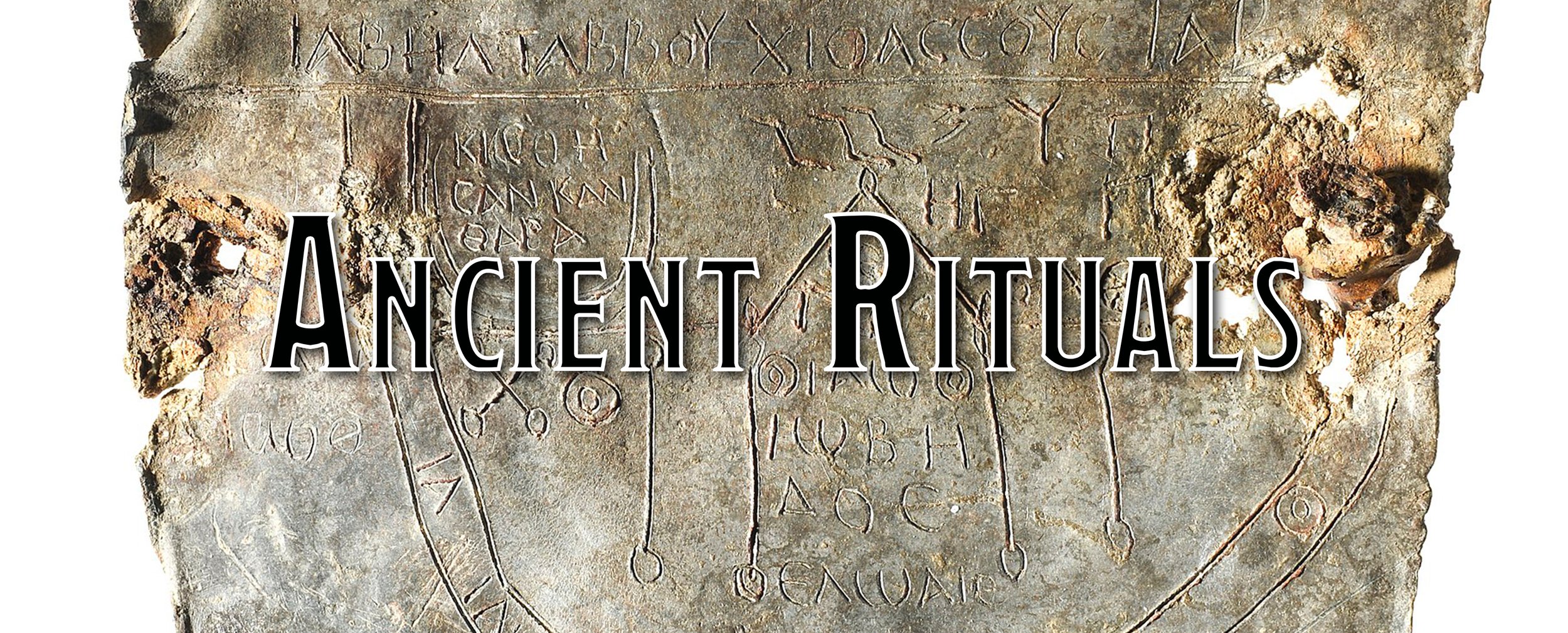
Metal is beaten into thin sheets. Incantations are cut into the metal, bringing with it curses or protection from chthonic deities.

By GRM Tongeren - Own work, CC0, https://commons.wikimedia.org/w/index.php?curid=125613034
Often buried near a neighbor’s house or placed in their well, these metal sheets were made to curse neighbors who displeased the creator of these sheets. Most were made of lead, gold, and silver, and they would be placed in underground and sometimes in canisters. The goal of burying them was that the earthen deities were often associated with evil and the underworld, so when you buried it, you were invoking the chthonic deities to curse the individual.
However, these spells could also be used as protection and ward off the chthonic deities and their curses. They would be written on the metal sheets and buried near homes, businesses, and temples.
For more information - MiniMinuteMan, Wikipedia
How to Use
These spell sheets can act as spell scrolls, but require a different activation method than just reading it out, like burying them into the ground or placing them in specific locations. While they are in those locations, the magic is much stronger and lasts for decades, instead of most spells ending after a few seconds or minutes.
They could also function as traps for adventurers heading into ossuaries and ancient burial temples. The entrances and key tombs within the structures are protected by these traps and could have any number of effects like the fireball spell, trapping a creature in a force cage, or something else.
3) Excarnation Platforms
An elevated structure where bodies are placed to decompose, they may be on top of stone pedestal, a large tree stump, or upon a rock with intricate carvings. These platforms allow the body to be laid out, exposed to the elements, and fed upon by birds and insects, and natural decay.

By Karl Bodmer - Library of Congress, Public Domain, https://commons.wikimedia.org/w/index.php?curid=1343321
Excarnation has many purposes, from helping spirits get closer to the afterlife to making it easier to carry bodies over great distances, the ultimate goal is to deflesh a body and only have the bones remaining. In some cultures, they may erect a cage over the body so that larger predators, like wolves, can’t run off with the bones, while others will elevate the body on platforms and hang the bodies in cages off of cliffs so that only the birds can reach the bodies.
For more information - Wikipedia
How to Use
Instead of just burial mounds and pyramids, your adventurers can encounter the undead at excarnation sites. From necromancers and demons creating undead and corrupting a holy location to a build up of necromantic energies that needs to be purified, these locations are places of spiritual power and should be treated with respect by the adventurers and residents.
4) Pharmakos
A ritual sacrifice to purify a city, settlement, or locale, people are driven out of the city, thrown from cliffs, tossed into volcanoes, or stoned by their fellow citizens.
Acting as human scapegoats, the pharmakos were treated as a way of purifying a city or locale, allowing those who lived there to symbolically cast out the evil within. Not every pharmakos or event ended in the scapegoats dying, some were just driven out, while others were beaten but left alive. That said, many were killed in order to appease angry gods or if the population thought of them as evil spellcasters, such as witches during medieval Europe.
For more information - Wikipedia
How to Use
Several adventures can spawn from a pharmakos, from innocents driven out of the city after being falsely accused of cursing the town, to even the adventurers themselves being ‘chosen’ to be the scapegoats for the city with the threat of being tossed into a volcano that held a trapped primordial.
5) Eleusinian Mysteries
Secret rites and ritualistic performances remind the congregates of the struggles of the gods, and their place within the cosmos.
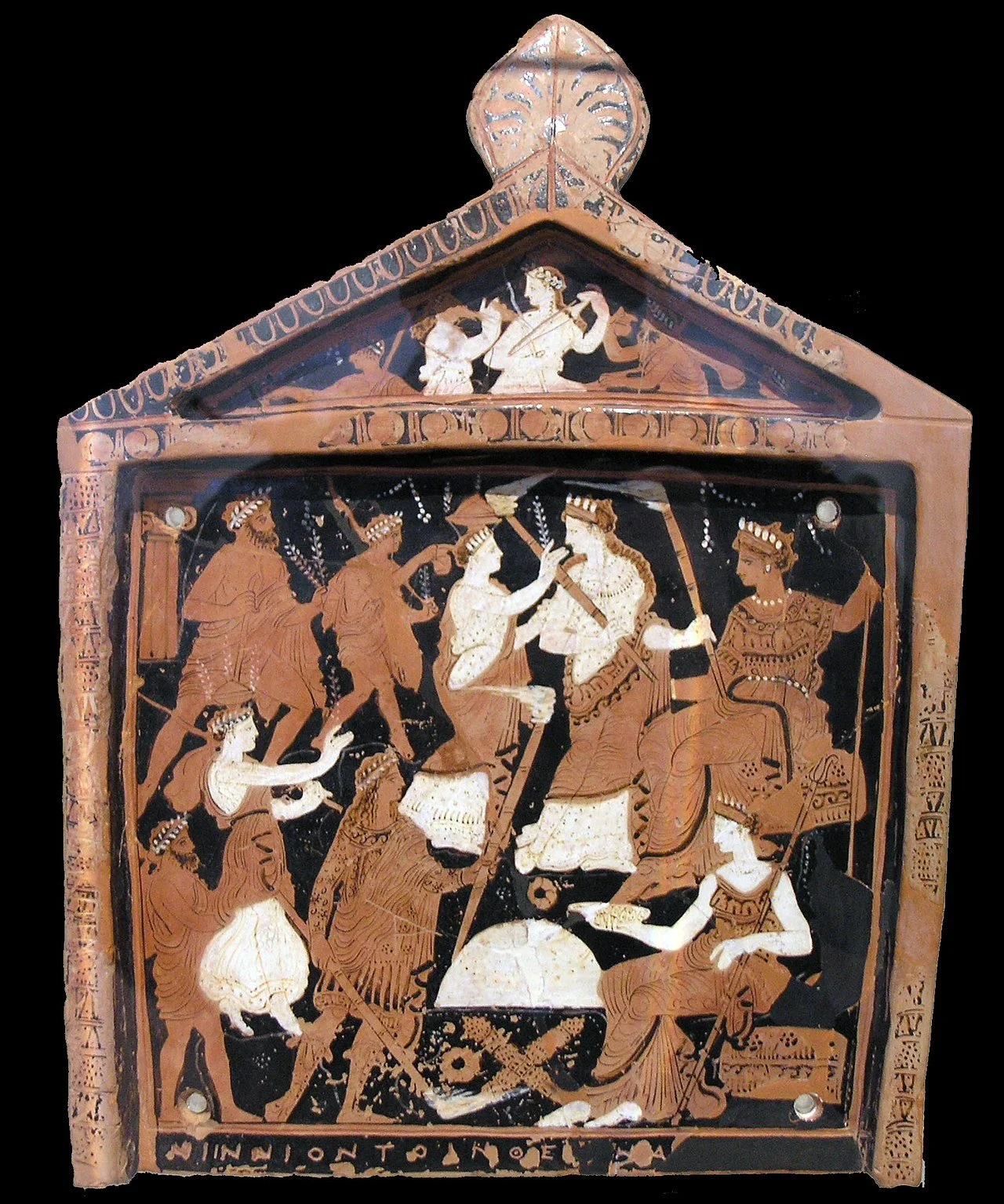
By Marsyas assumed - Own work assumed, CC BY 2.5, https://commons.wikimedia.org/w/index.php?curid=468881
The Eleusinian Mysteries may be the most famous example of a secret religious rite, but there are many others for almost every deity and religion. In these rites, participants are shown artifacts and miracles, perhaps consuming mind-altering substances such as alcohol and poppy.
While not much information has escaped these secret religious rites, there are examples and texts that hold some of the information, like sharing of the kykeon drink. This drink might have had a psychoactive ingredient within it, allowing the imbibers to experience an otherworldly experience.
For more information - Wikipedia
How to Use
No matter where adventure might take you, there is always a secret cult attempting to destroy the world. These cults hold sacred rites that sneaky adventurers might stumble upon, learning more about their enemies and the otherworldly creatures that the cult can communicate with and summon to the world.
Though, these cults need not be evil. Some deities may hold special festivities for their congregants, granting their clerics unique boons for taking part or leading the ceremonies. In such cases, the clerics might have to travel to distant locales to gather unique ingredients for the festival and were given this holy quest by their church. Those clerics and paladins seeking atonement for going against their deity may have to be purified in one of these secret rites to regain their lost power.
Being Respectful
Lastly, be respectful of real religions and ancient people if using real-world events, artifacts, and rites in your games. While many may seem ‘weird’ to modern eyes, it was everyday life for those in our past and held special meaning to them.
Are there any rituals or artifacts you’ve drawn inspiration from? Share in the comments below to help other Game Masters!
Like what we do?
Join our Patreon!
You’ll get early access to deep dives, the Homebrew Hoard
featuring 500+ monsters, ad-free articles, and more!
Follow us on Reddit to keep up to date on everything we talk about!